
Find St. Louis Criminal Records
St. Louis criminal records come from two main tracks: the St. Louis Metropolitan Police Department manages arrest reports and police records, while the 22nd Judicial Circuit Court holds case files for charges prosecuted in the city. St. Louis is an independent city -- it is not part of any Missouri county -- which affects how records are organized and where you go to find them.
St. Louis Quick Facts
SLMPD Records for St. Louis Criminal Cases
The St. Louis Metropolitan Police Department Records Service Center is the starting point for police reports, arrest records, and other documents tied to criminal activity in the city. The Records Service Center is open Monday through Friday, 8 a.m. to 4 p.m. Walk-in service is available during those hours. Payment for records is accepted only in cash, money order, or business check. Personal checks and debit or credit cards are not accepted, so plan accordingly before you visit.
Two types of record checks are available directly from SLMPD. A city-only record check covers arrests and records from St. Louis city law enforcement and costs $4.50 per check. A combined city and county check extends coverage to both St. Louis city and St. Louis County records and costs $9.00. The city and county are separate jurisdictions -- records from one do not automatically appear in the other -- so if your search might cover activity in both areas, the combined check saves time. Open records from SLMPD include arrests within the last 30 days and conviction records.
Note: St. Louis City and St. Louis County are entirely separate jurisdictions with their own courts, police departments, and record systems. Do not assume a city check covers county activity.
St. Louis Sunshine Law Records Requests
Public records requests in St. Louis are governed by Missouri's Sunshine Law (Chapter 610, RSMo). SLMPD maintains a dedicated Sunshine Law Unit to handle formal requests under this law. Section 610.100 of the Missouri Revised Statutes sets out what arrest record information must be made public -- including the name of the person arrested, the date and location of the arrest, the offense charged, and the arresting agency. Section 610.023 requires agencies to acknowledge requests within 3 business days.
SLMPD also offers an Online Records Portal that lets you submit requests and track their status without visiting the department in person. This is useful if you need a report quickly or are submitting from outside the area. The portal does not replace in-person service for all request types, but it covers most standard police report requests. Large or complex requests -- such as video footage -- may still require in-person coordination with the department's Sunshine Law Unit.
Some records are exempt from disclosure. Active investigation materials, juvenile records, and documents protected by court order are among the common exemptions. If SLMPD denies a request or withholds part of a record, they are required to identify the specific statutory basis for doing so.
22nd Judicial Circuit Court Criminal Records
State criminal charges in St. Louis are prosecuted through the 22nd Judicial Circuit, which serves only St. Louis City. The circuit court maintains the full case record for any charge that moves beyond the municipal level -- indictments, arraignments, trial records, plea agreements, and sentencing orders all live here. These files are separate from what SLMPD holds. A police report documents the arrest; the circuit court file documents everything that happened after.
You can search 22nd Circuit criminal cases through Missouri Case.net at courts.mo.gov/casenet. Case.net is free and searchable by name, case number, or filing date. It covers all Missouri circuit courts, so St. Louis cases appear alongside records from every other county in the state. Recent filings typically appear in the system within a few days of being entered by the clerk's office. Older paper records may not be in Case.net and require an in-person visit to the circuit court clerk.
The St. Louis Metropolitan Police Department's records page shows available services for requesting criminal records, arrest reports, and other public documents.
The SLMPD records section covers record check pricing, hours, payment methods, and links to the Online Records Portal and Sunshine Law Unit.
Missouri State Criminal History Records for St. Louis
Beyond the city-level sources, two statewide systems cover St. Louis criminal history. The Missouri Automated Criminal History Site (MACHS) at machs.mo.gov provides name-based background checks for $15 and fingerprint-based checks for $20. MACHS pulls arrest and conviction data from all Missouri law enforcement agencies, so St. Louis arrests recorded by SLMPD appear in a MACHS check alongside any records from other parts of the state. This is a broader search than a city-only SLMPD check, and it is often the right choice when you need a complete statewide picture.
The Missouri Department of Corrections runs a separate offender search at web.mo.gov/doc/offSearchWeb. That tool covers people currently in state custody or previously released from a state prison sentence. It does not include people held only in city or county jails. For registered sex offenders in the St. Louis area, the Missouri Sex Offender Registry at mshp.dps.missouri.gov lets you search by name, address, or date of birth to find offenders registered in the city.
Expungement of St. Louis Criminal Records
Missouri's expungement law is at RSMo 610.140. To expunge a St. Louis criminal record, you file the petition with the 22nd Judicial Circuit Court, since that is where most St. Louis state charges are heard. The waiting period is 3 years for misdemeanor convictions and 7 years for felony convictions, measured from the end of the full sentence including probation or parole. Not all offenses can be expunged -- class A felonies, dangerous felonies, and certain other serious charges are excluded by statute.
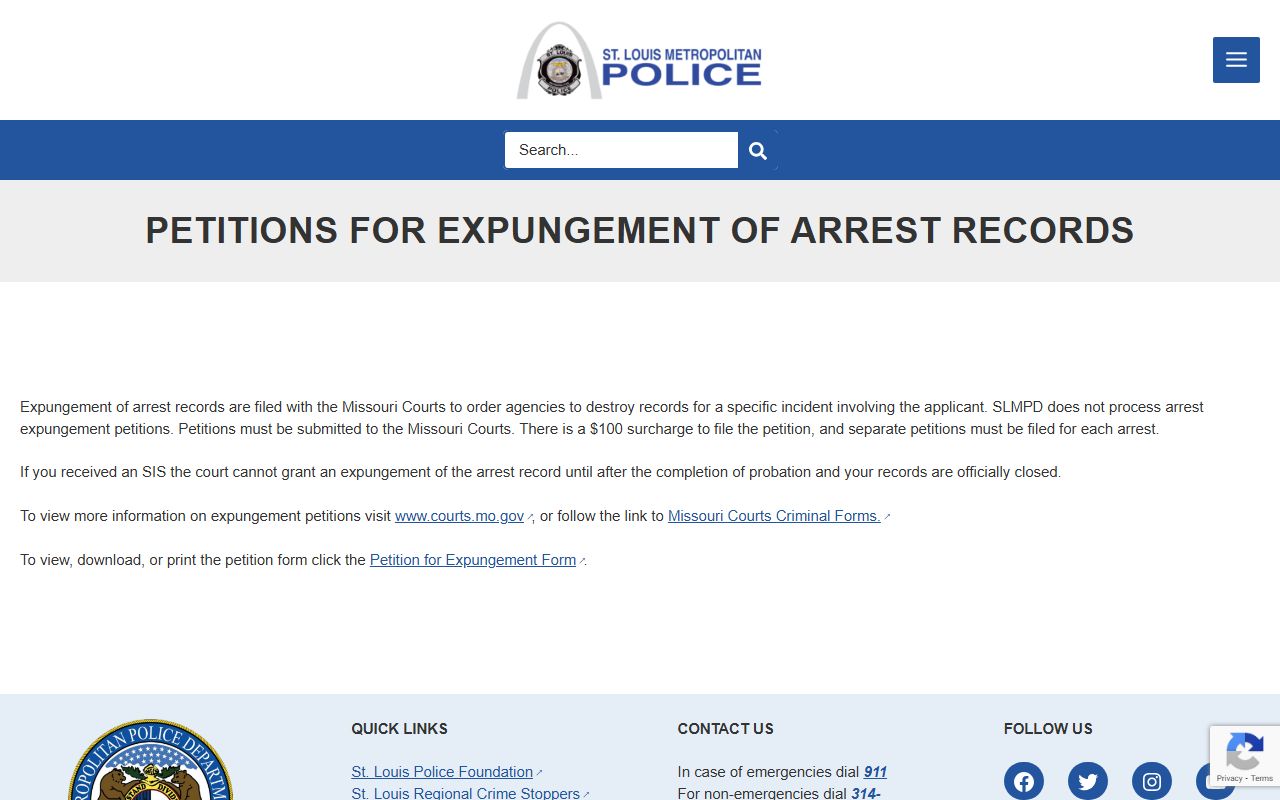
There is a $100 surcharge to file an expungement petition with Missouri courts. After filing, the court will notify SLMPD, the Missouri State Highway Patrol, and other relevant agencies. All parties have the right to object before the hearing. If the court grants the petition, the agencies must seal the record. A sealed record is not visible to most employers or members of the public, though certain licensing boards and law enforcement agencies may still be able to access it. SLMPD's expungement information page has additional detail on how the department handles granted petitions and what steps follow a court order.
Note: Expungement eligibility depends on specific facts of the case, including charge type, sentence, and whether any other convictions occurred during the waiting period. Legal aid or a licensed attorney can evaluate your situation.
Nearby Cities with Criminal Record Resources
Other qualifying cities near St. Louis have their own criminal records pages with local police and court information.